KonstnärligaKonstnärligaKonstnärliga
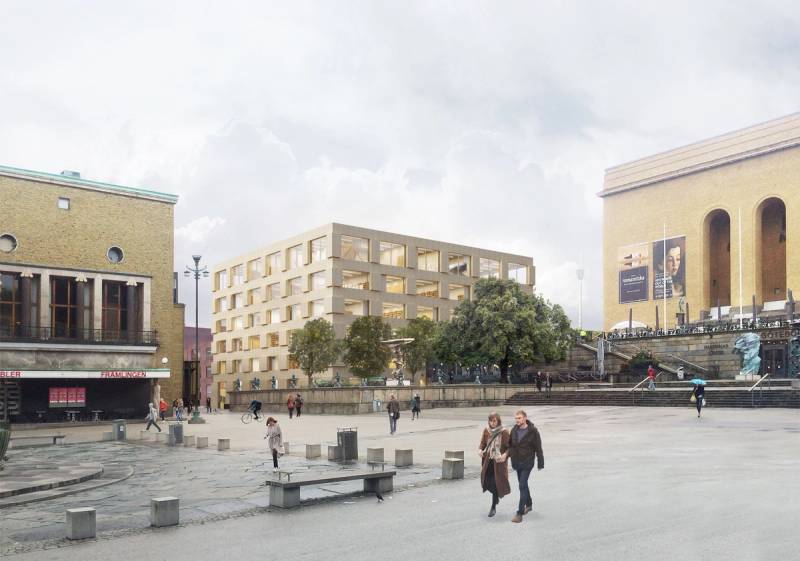
The scheme creates a new assembly of buildings that brings together the entire Faculty of Fine, Applied and Performing Arts: the Valand Academy, the School of Design and Crafts (HDK), and the Academy of Music and Drama (HSM). The site is located next to Götaplatsen, one of Gothenburg’s most central squares, and will, through its strategic urban position, further strengthen the capacity of these art faculties to interact with current events in society and the city.
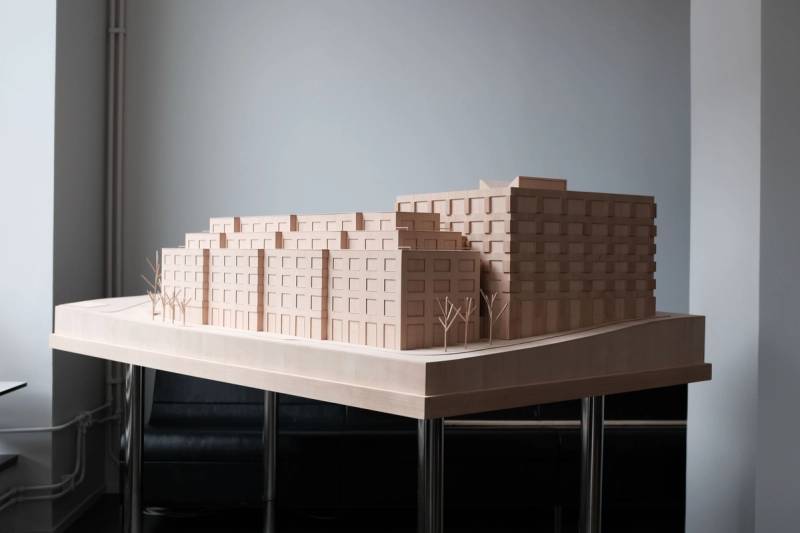
The competition phase included a strategic development plan for the entire campus: how to best distribute the university library and the artistic institutions within existing and new buildings, and how this could open up the University to foster better interaction with its neighbouring districts, which possess very different characters.
The campus, already a place of high cultural heritage value, is laid out around a beautiful park and contains several listed buildings that add to its dense historical context. Further adding to the complexity of the brief, entrances to the new West Link underground station were to be integrated into the new buildings.
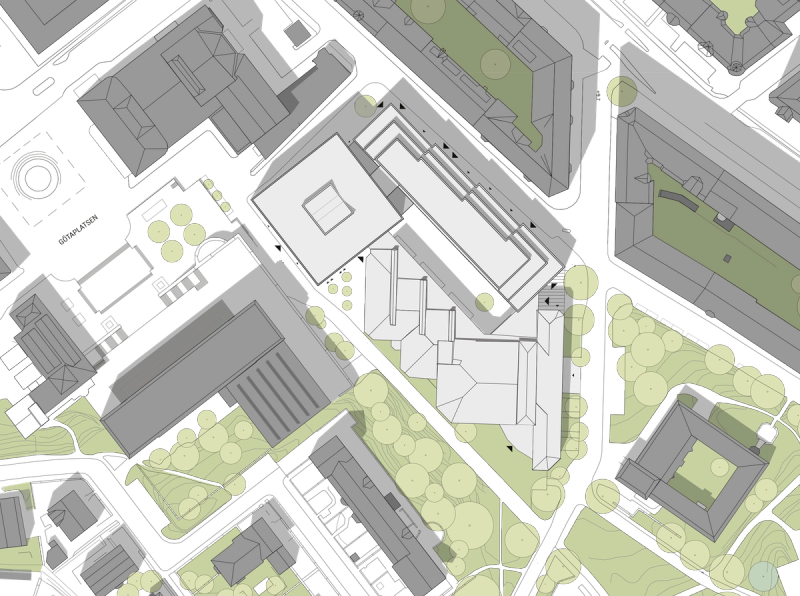
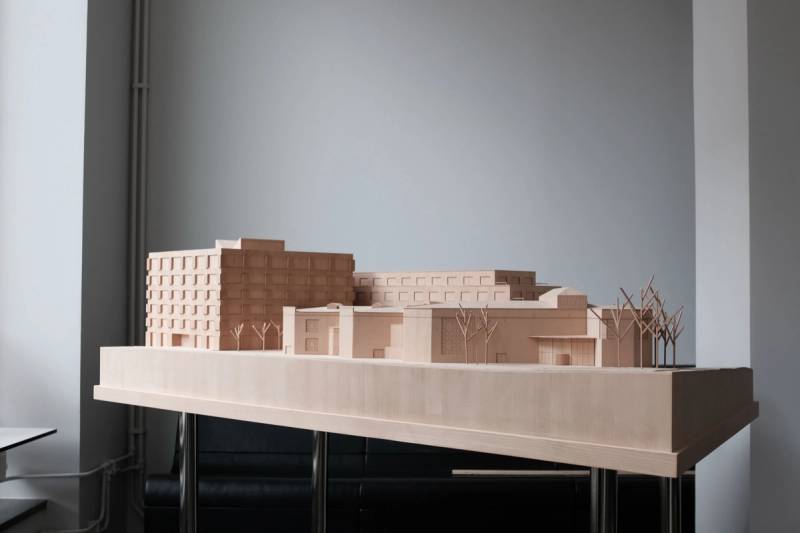

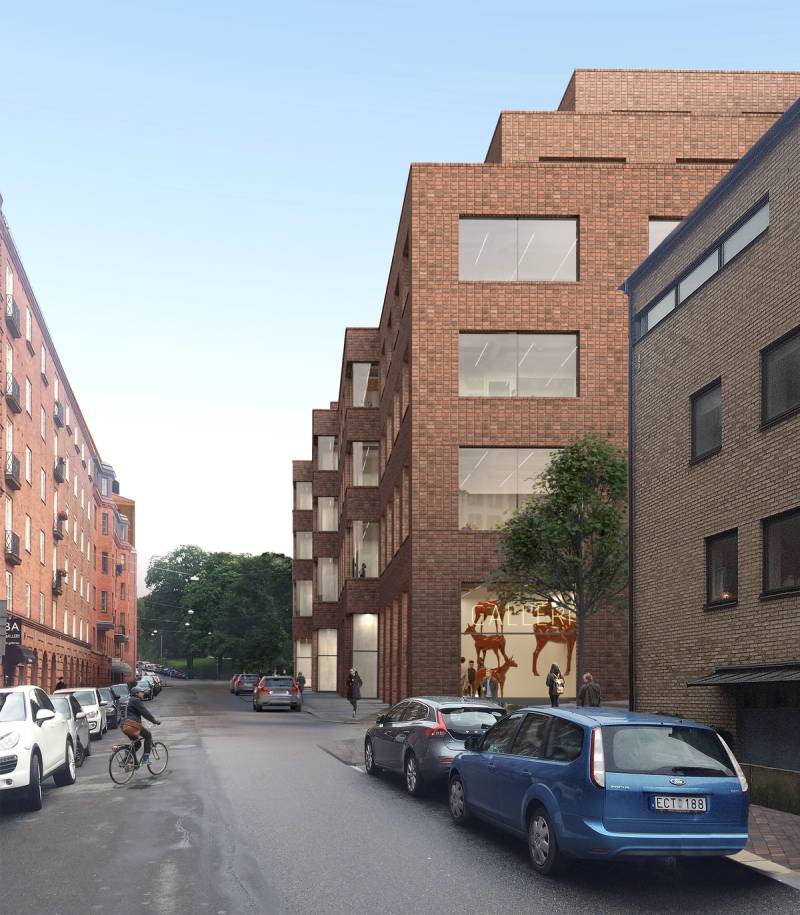
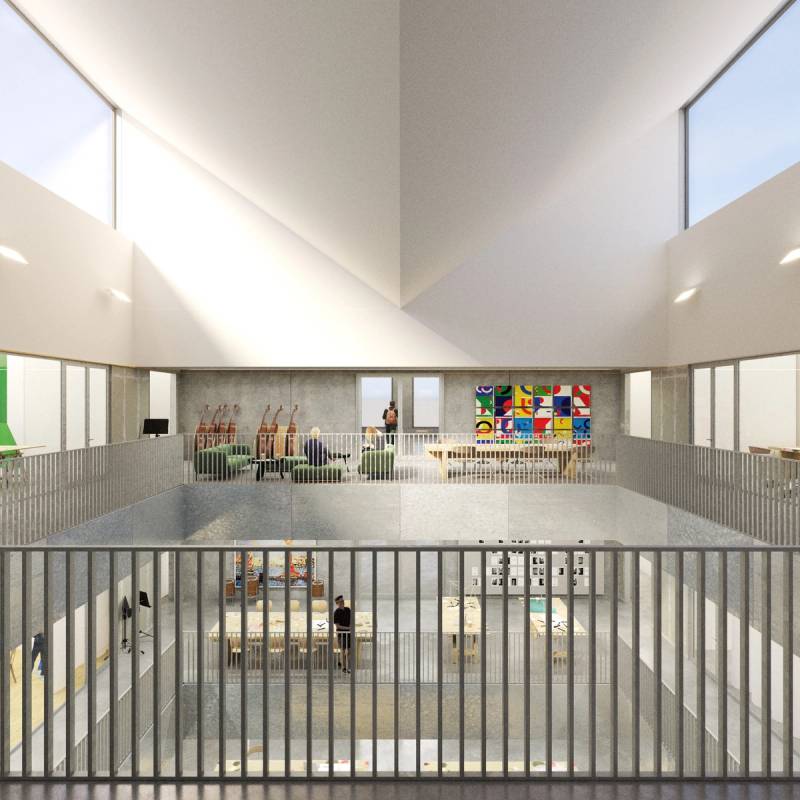
The Faculty of Fine, Applied and Performing Arts is housed in a series of interconnected new buildings, which also incorporate the existing structure containing practice studios for dance and music. It forms an entire urban block around a closed courtyard that doubles as an open-air workshop. The northern building sits on a corner next to the Art Museum and the City Theatre, marking the arrival of the university at the core of the city’s cultural centre. The building’s structure is intentionally straightforward, with ateliers, studios, and classrooms organized across six floors around a naturally lit atrium, reminiscent of a traditional industrial building.
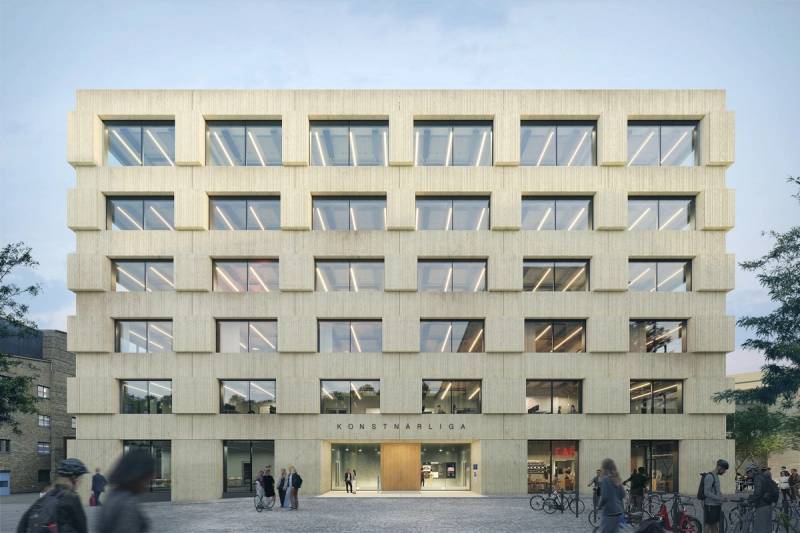
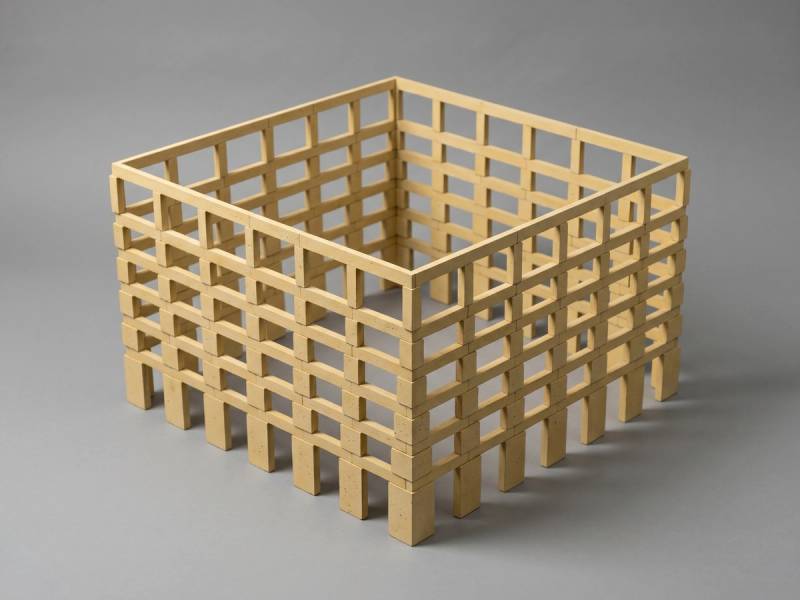
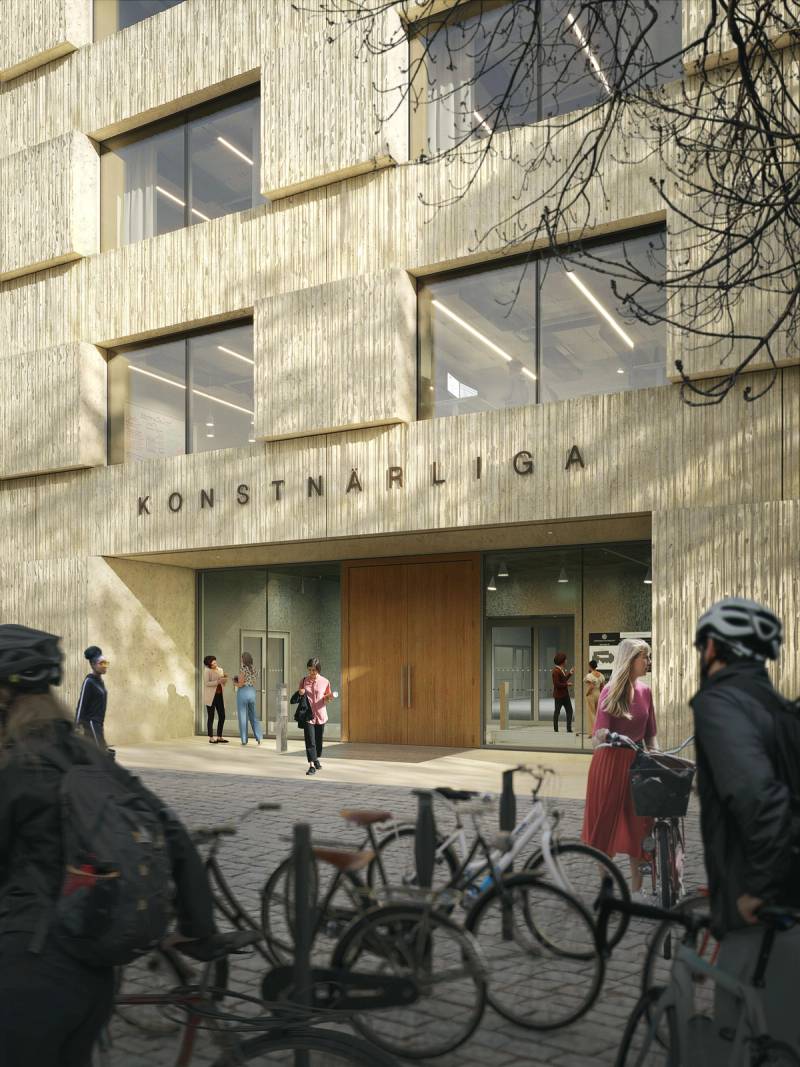
The facades are constructed of large matrix-cast concrete blocks stacked on top of each other, slightly offset so that the building becomes more open and transparent towards the sky. The result is an archaic structure that, with its rhythmic symmetry, engages in dialogue with the neoclassical architecture around the Götaplatsen square. The higher floor to ceiling height of the top floor ateliers further contributes to the openness and elevation of the volume and signals the purpose of the building to its context. The use of deep red and sand coloured concrete allows the new buildings to complement the existing urban environment and its neoclassical architecture, a legacy from the Gothenburg Tercentennial Jubilee Exposition of 1923.