Atrium HouseAtrium HouseAtrium House
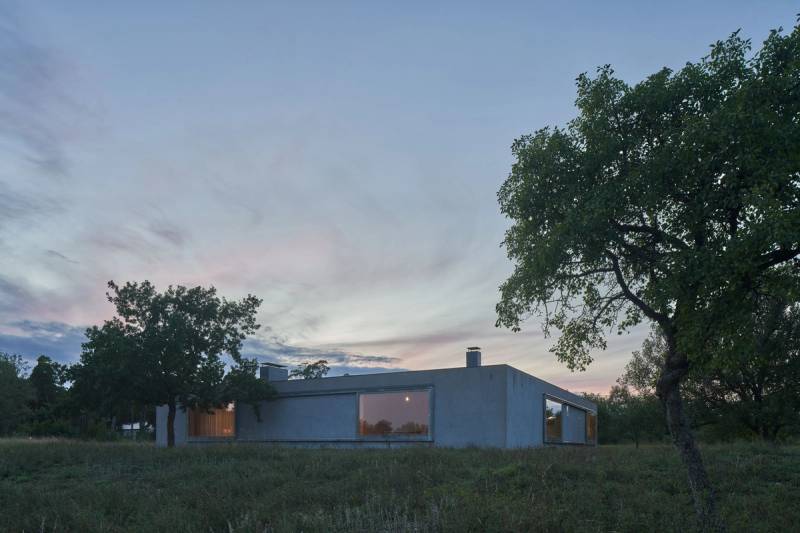
Atrium House is a vacation home in När Parish on the island of Gotland in the Baltic Sea. It is built on a slight ridge that marks the location of the coastline a thousand years ago—the edge where the land once met the sea.
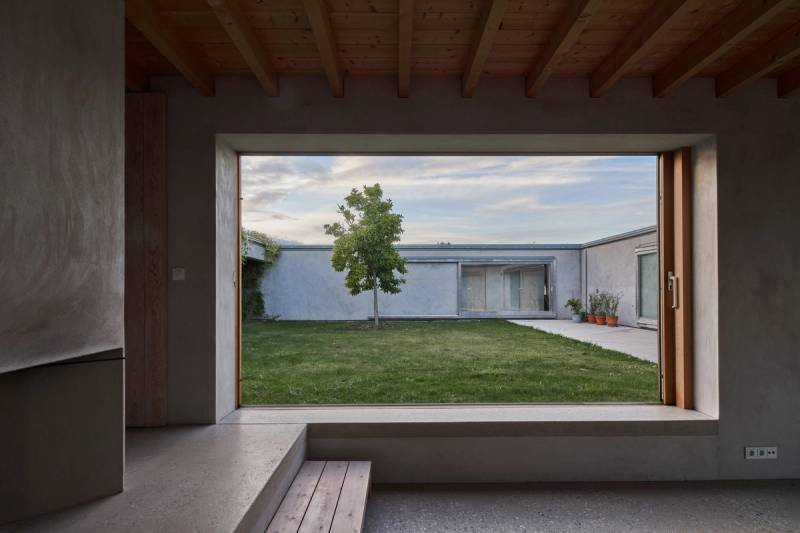

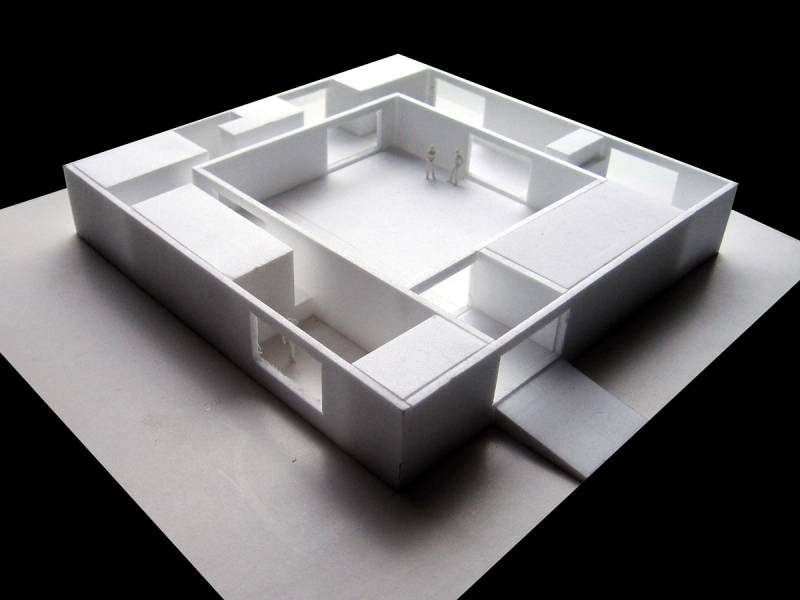
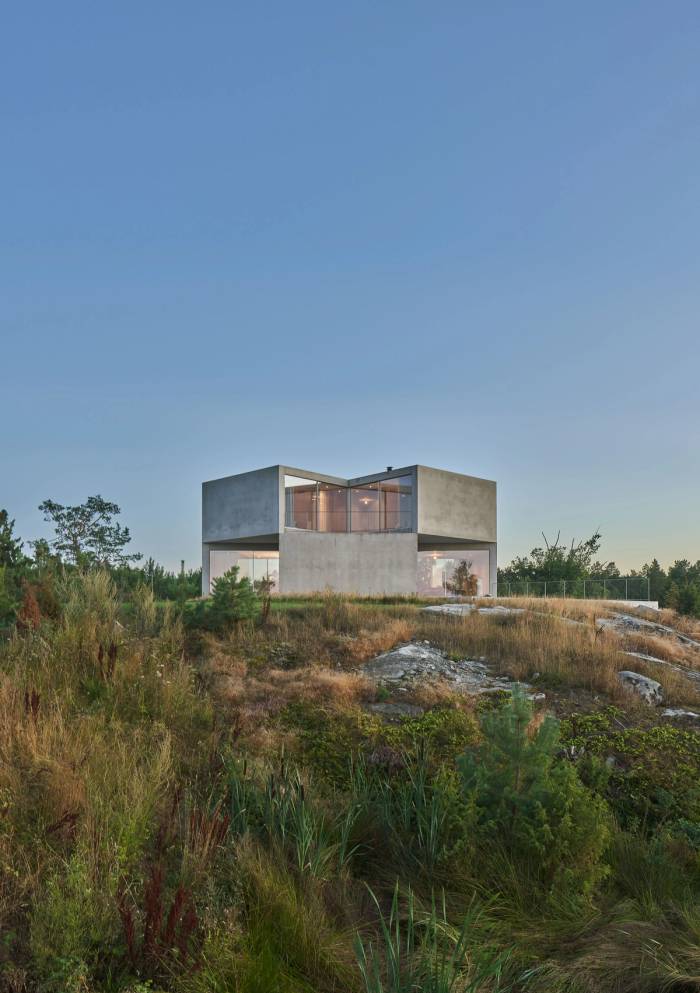
In relation to the open and expansive landscape, the building appears more as a low wall than a house. It is built around a completely enclosed atrium courtyard designed to serve as a fixed point, a sheltered outdoor room, while the rest of the property is left undisturbed as a meadow where grazing sheep prevent the land from returning to forest.
The house is inspired by the strong materiality of Gotland’s vernacular agricultural architecture. Another source of inspiration is the remains of a unique square medieval wooden fortress known as Bulverket, found in the middle of the island’s second-largest lake, Tingstäde Marsh. Like Bulverket, this house can be described as an austere architectural structure in which the elements required for everyday functions have been reduced to a minimum.
The programme is designed for three generations: a young family with children and their grandmother have their rooms located diagonally in two of the corners, meeting at the angle in a common living room and kitchen. Entrance to the courtyard is through a large barn door, and into the house directly via any one of three openings towards the atrium. In winter, the storage room can double as a mudroom.
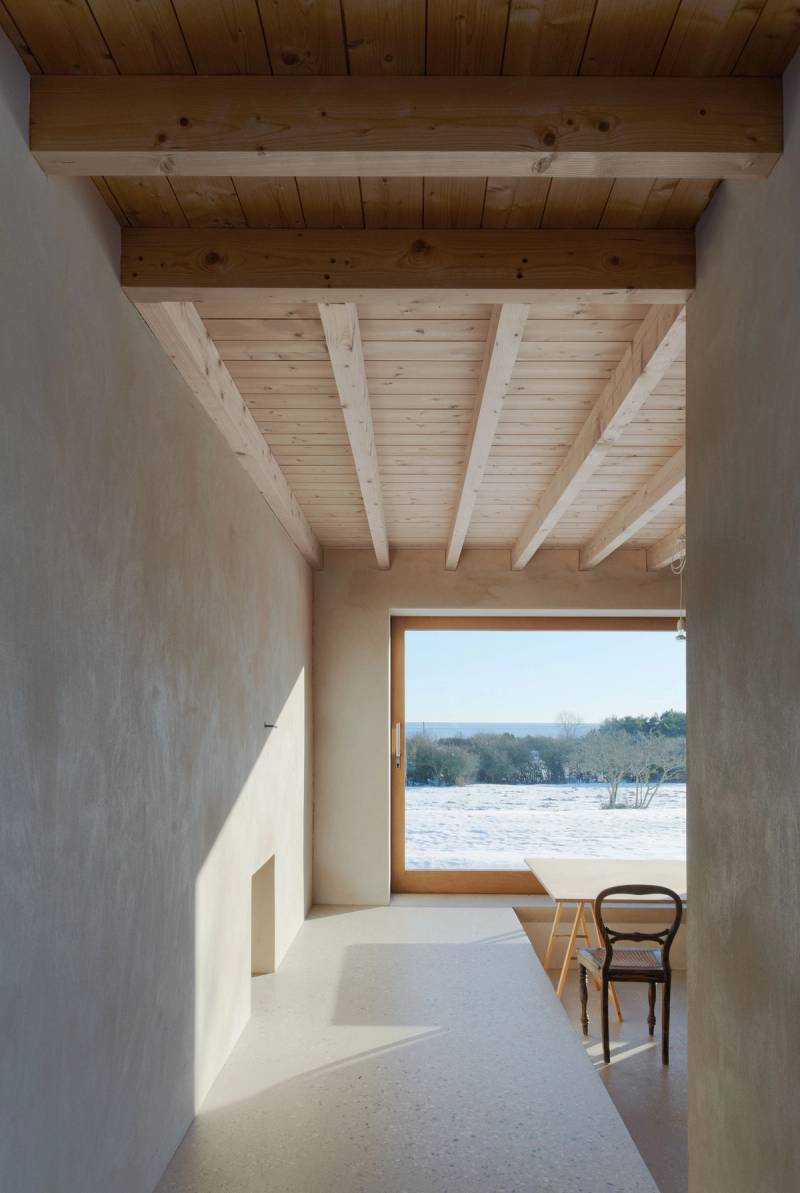
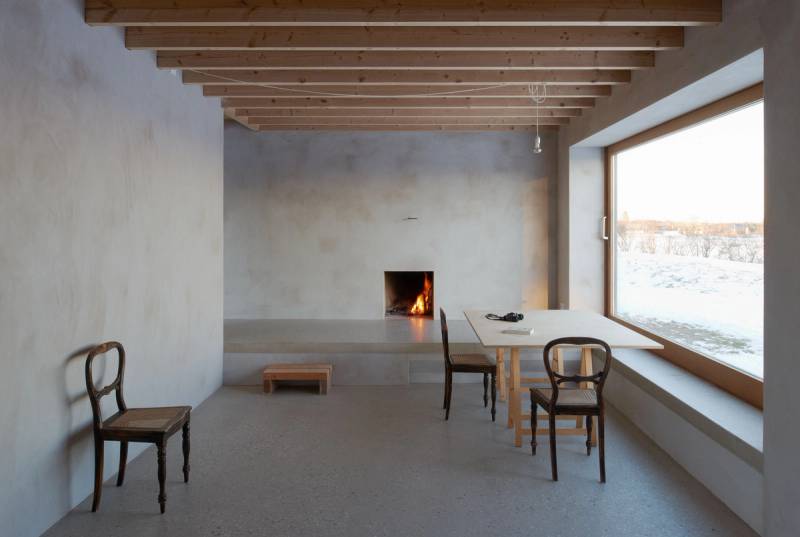
The house is narrow, but its openings are broad, giving the interior the character of a sheltering niche within the open space of the landscape. While the roof plane maintains a consistent elevation throughout the house, the interior floor steps up and down in accordance with the surrounding terrain. This means the ceiling height varies among the main spaces, which are arranged in a continuous ring around the atrium. Within this continuous space, the smaller rooms are collected into a number of solid blocks.
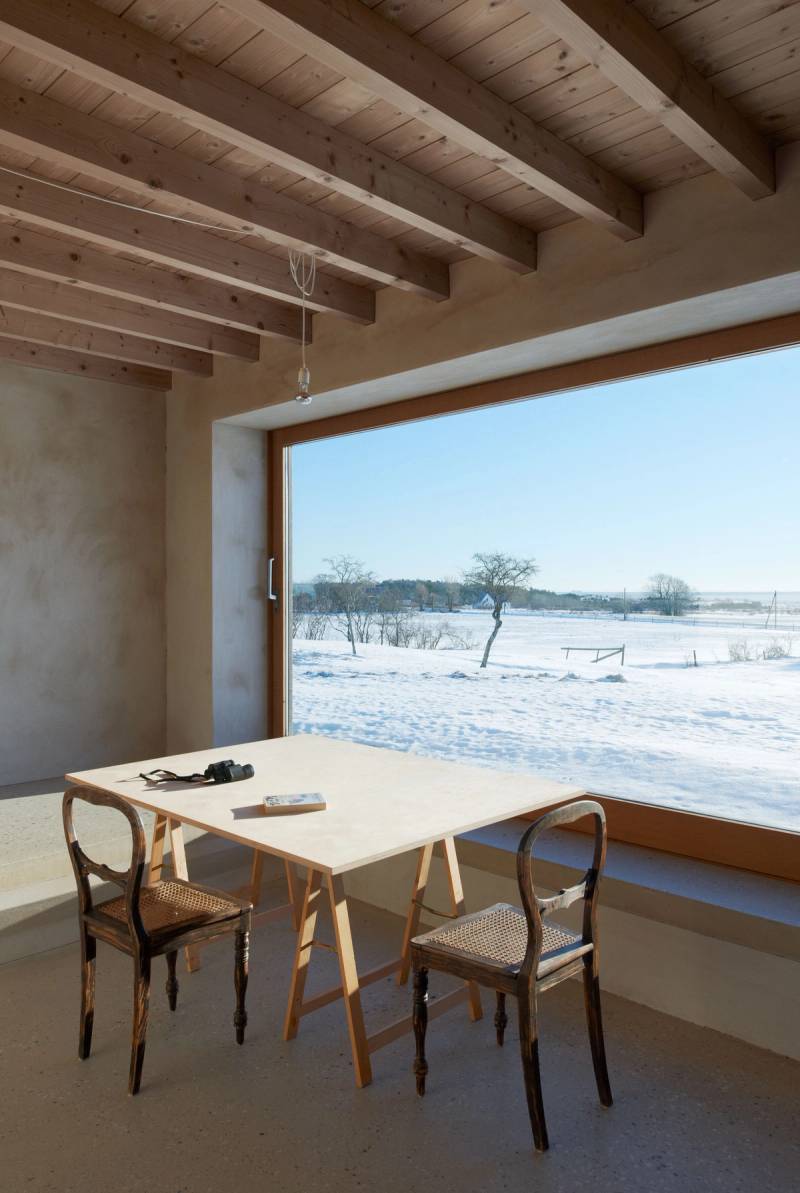
The masonry construction features natural plaster tinted with carbon black, while exterior metal components are made of oxidised zinc. The oak doors and windows have been treated with tar oil, a preservative that allows the wood to turn grey over time in harmony with the other façade materials.
The large sliding glass windows are surface-mounted on the exterior walls, following the same principle as traditional barn doors. Similarly, the interior doors are surface-mounted, allowing the walls to appear unbroken.