Hedda AnderssonHedda AnderssonHedda Andersson
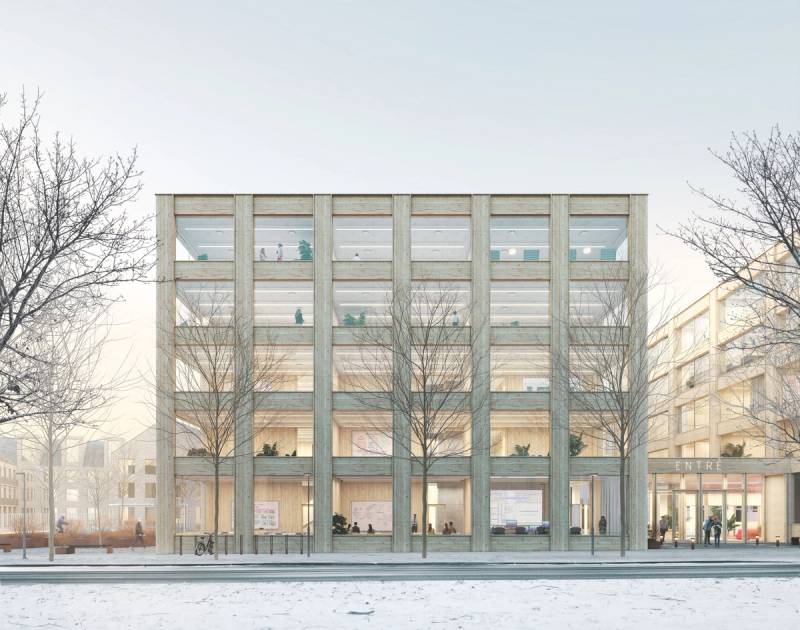
The proposal for Hedda Andersson Upper Secondary School aims to establish the new school as a clear and natural part of the urban fabric while preserving and strengthening the qualities of the surrounding residential neighbourhoods and public spaces. By carefully distributing building volumes and open spaces, the project seeks to create well-scaled urban environments and a welcoming campus atmosphere. The school is envisioned as a visible and open destination within Lund’s knowledge-oriented city.
The main school building is placed along Svanevägen, with a large south-facing schoolyard that provides good outdoor conditions and a favourable microclimate. Residential buildings are proposed along the western, southern, and eastern edges of the site to create a gradual transition to the surrounding neighbourhoods. This arrangement strengthens the urban structure, supports walking and cycling connections, and introduces a series of green courtyards, plazas, and paths that integrate the school with nearby parks and streets while promoting safety and accessibility.
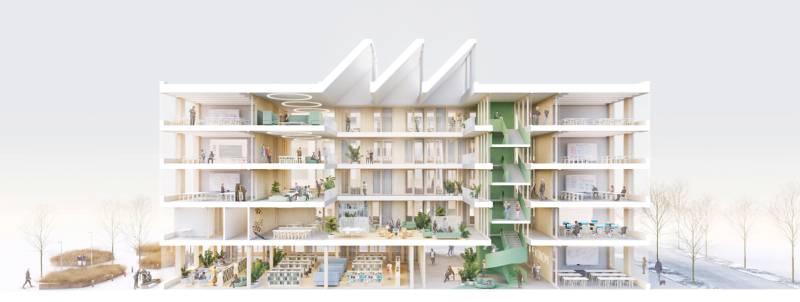
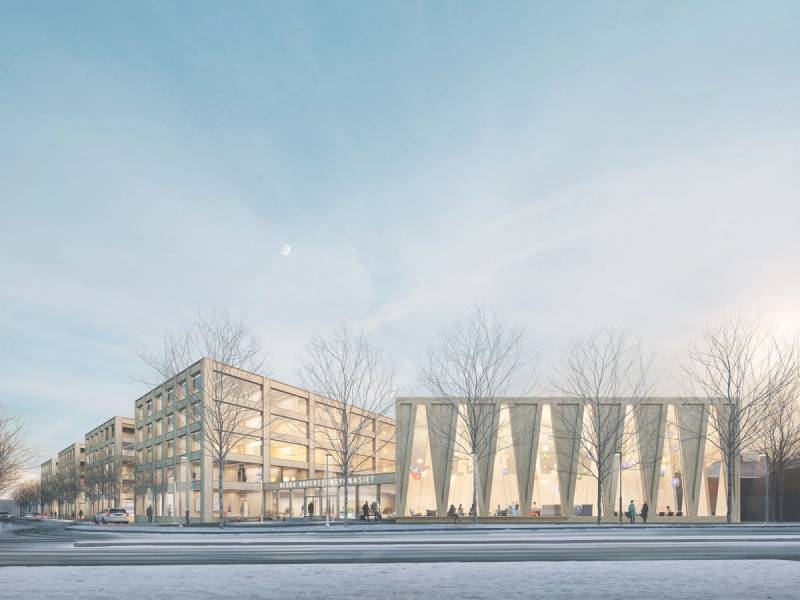
The architectural concept emphasises a single, coherent school building, which supports efficient internal connections and strengthens the social and pedagogical exchange between students and staff. The building’s wooden façades and generous glazing create a transparent and inviting atmosphere. At street level, key public functions such as the lobby, café, forum, and auditorium are visible and accessible, forming an active interface between the school and the city.
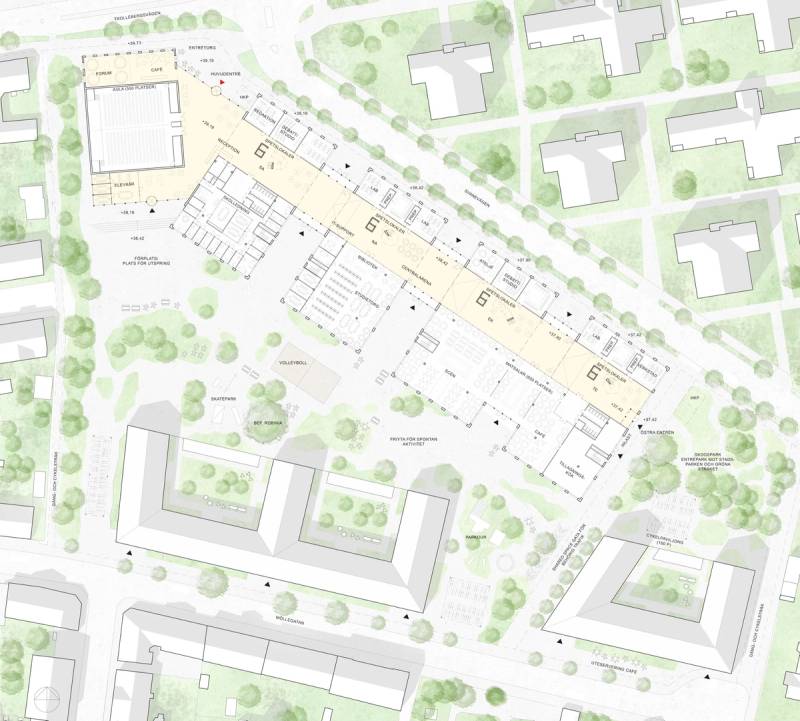
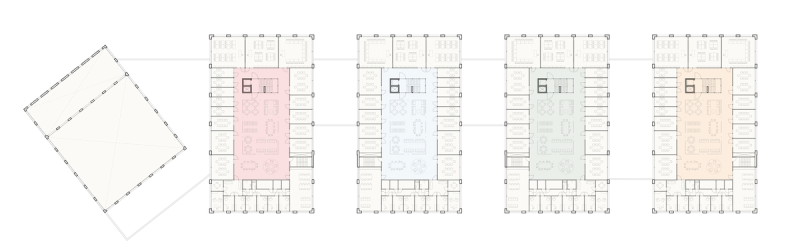

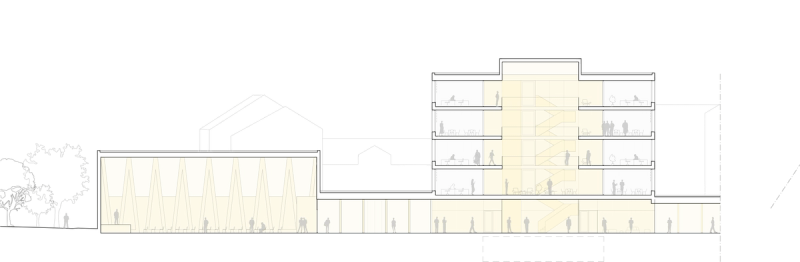
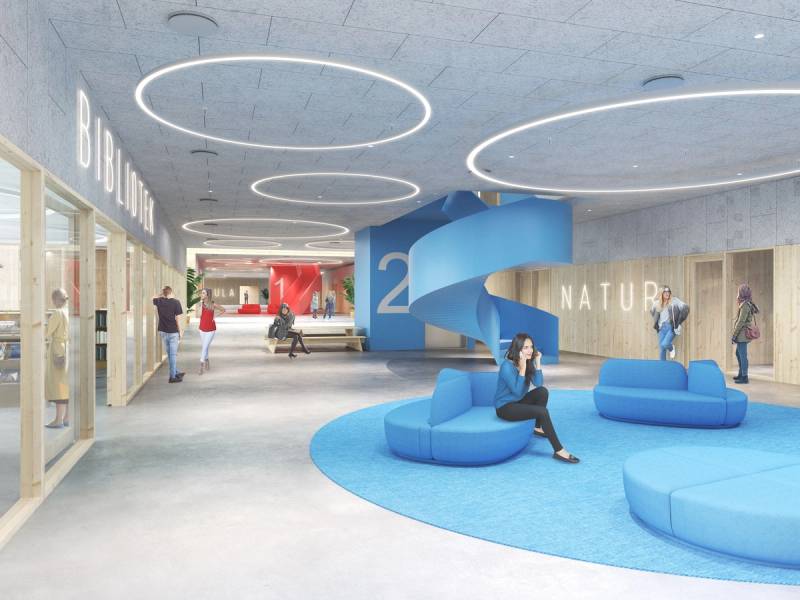
At the heart of the school is a central interior street known as the “Arena,” conceived as a social spine similar to a Rambla. This space connects the main entrance with the library, dining hall, study areas, and specialised program facilities, creating a lively sequence of meeting places. With daylight, visual connections, and direct access to the outdoor spaces, the Arena supports both informal interaction and efficient movement throughout the building.
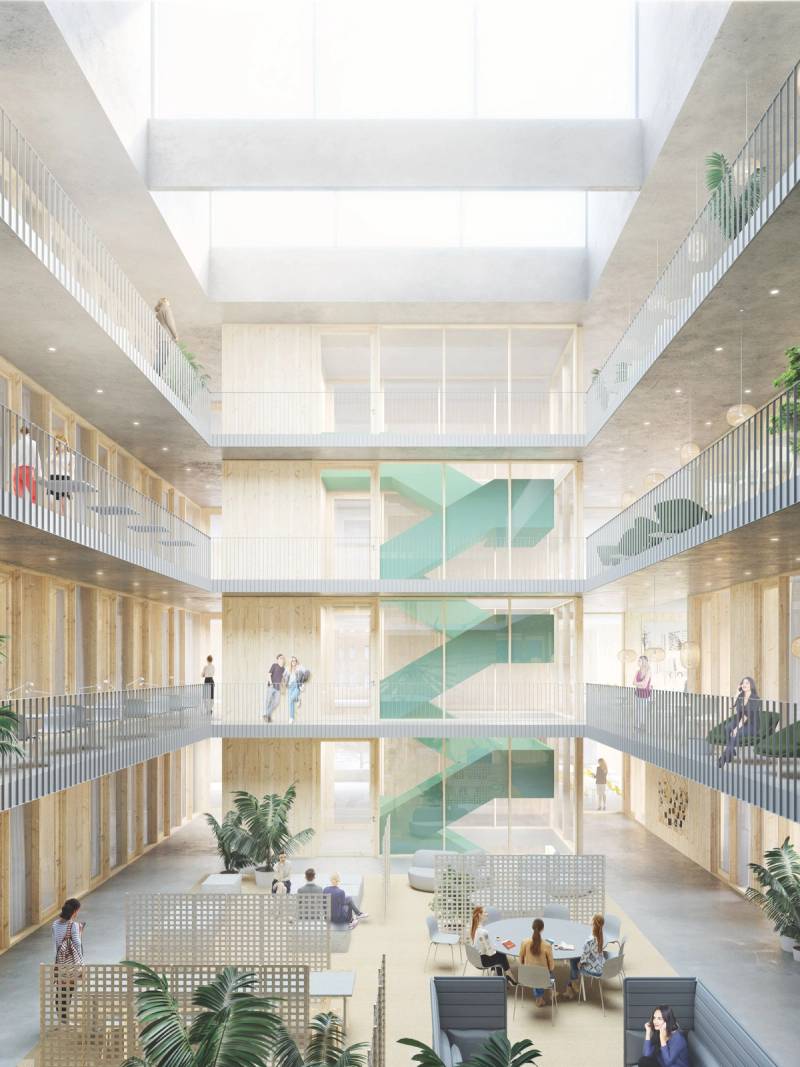
The school is organised around four program units, each with its own identity and internal social hub arranged around a light-filled atrium. These smaller learning environments provide a sense of belonging within the larger school while allowing flexibility in teaching spaces and layouts. By combining large shared facilities with more intimate learning environments, the design creates a flexible, socially sustainable school that supports collaboration, orientation, and a strong collective identity.