ADM HelsinkiADM HelsinkiADM Helsinki
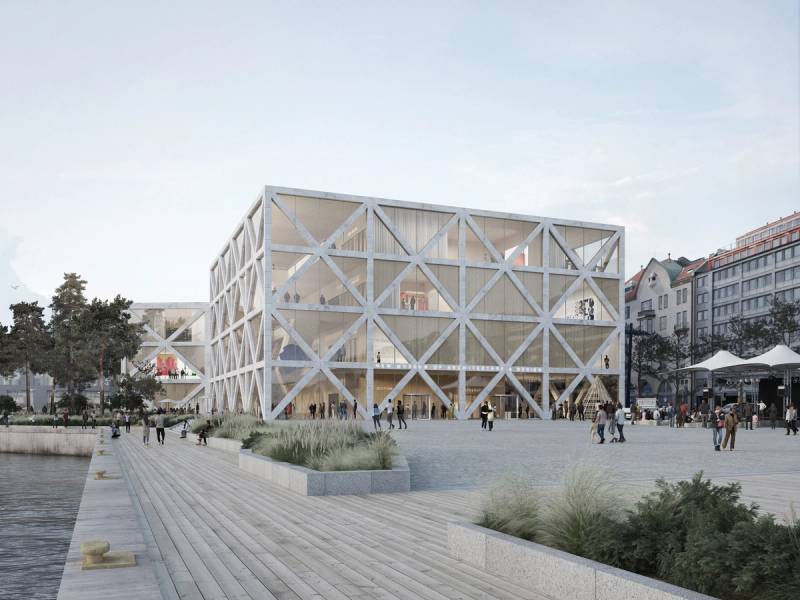
The proposal for the new AD Museum envisions a flexible, sustainable, and highly integrated cultural landmark that bridges the gap between Helsinki’s historic city centre and the new Makasiiniranta waterfront district.
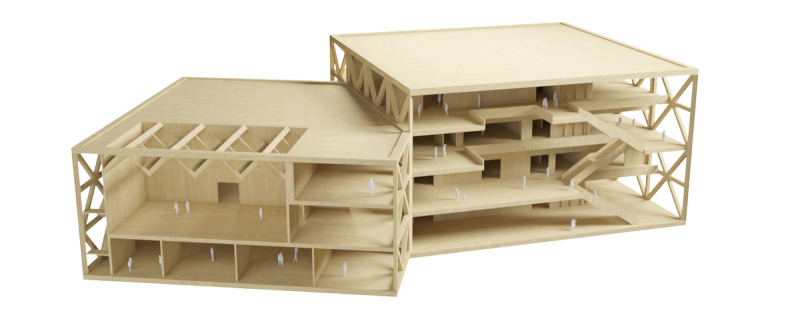
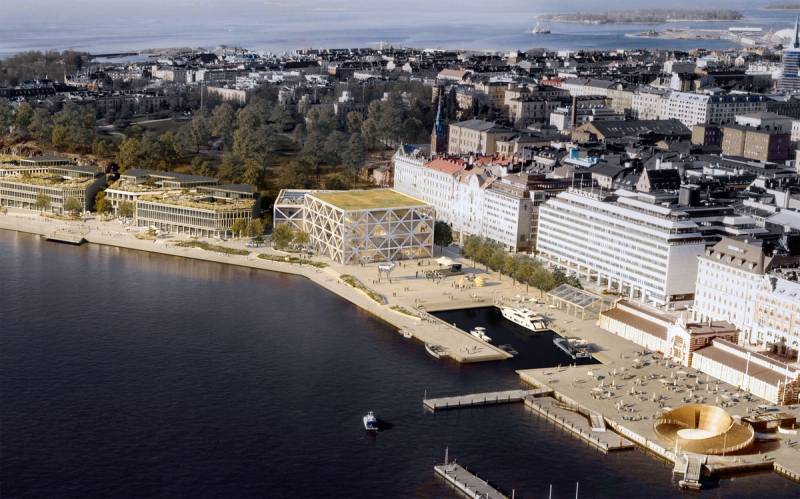
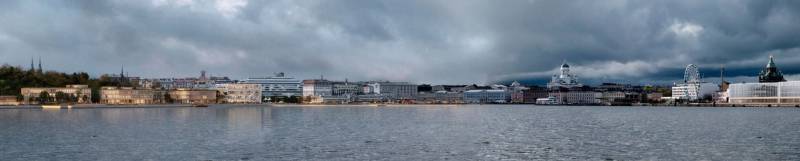
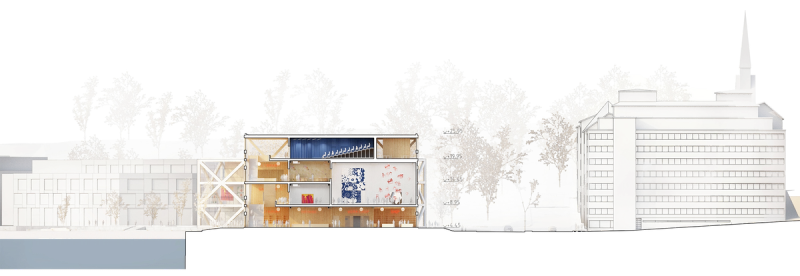
The building consists of two angled volumes (three and four storeys high) designed to align with both the modern diagonal alleys of the district and the traditional grid of the old city.
The exterior features a timber truss frame clad in light Finnish granite. This "exoskeleton" design creates an expressive façade that honours the site’s industrial heritage while acting as a focal point for the new public realm. The building’s stepped heights create a seamless transition to the surrounding environment, carving out specific outdoor zones such as a museum square, a waterfront café terrace, and dedicated logistics areas.
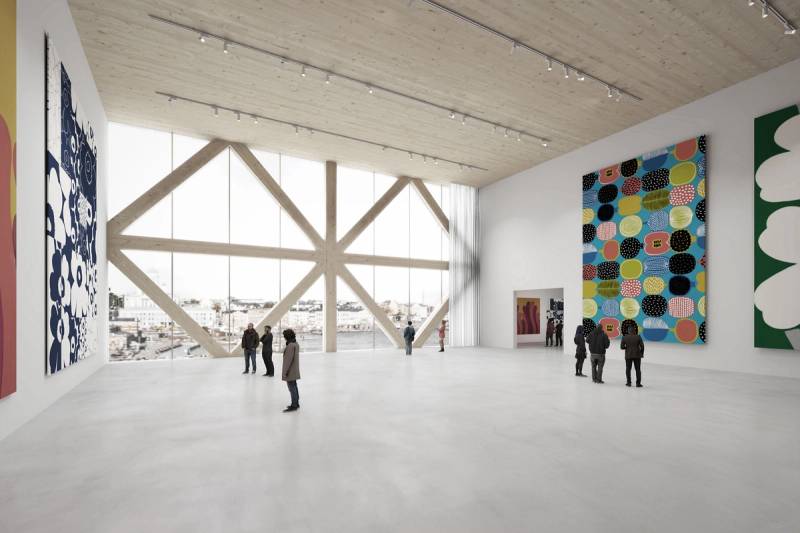
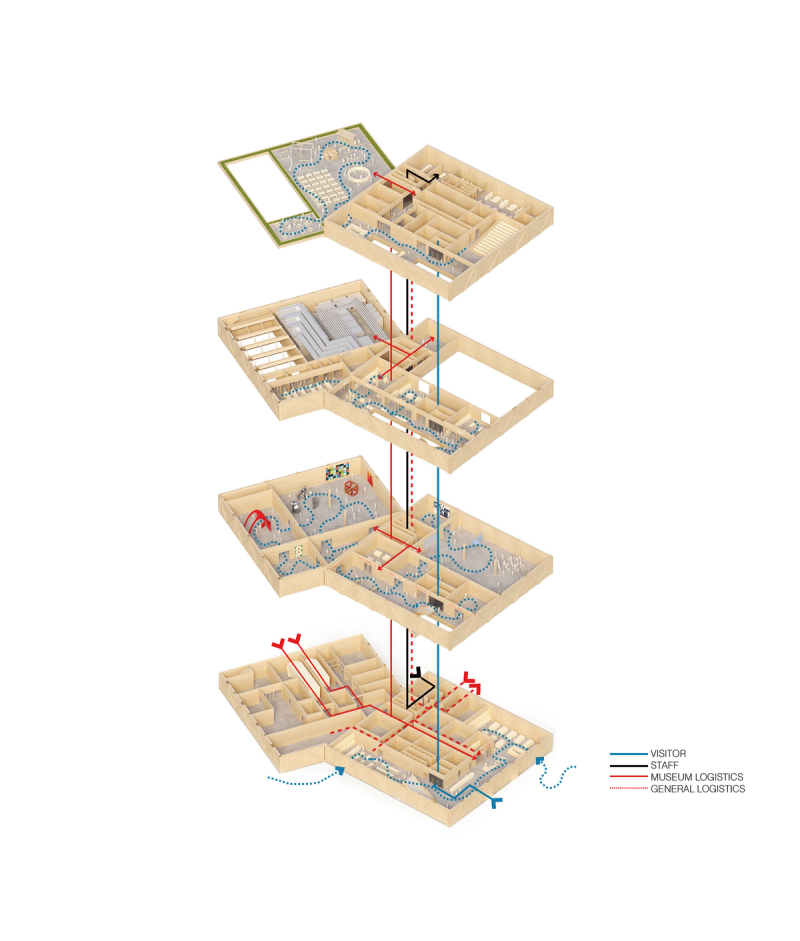
The museum is designed as robust, open architecture that can adapt to changing institutional needs. Large, light-filled rooms serve as a neutral backdrop for exhibitions, workshops, and talks. A multilevel, sunlit lobby serves as the heart of the building; it ensures easy orientation and provides visitors with views of both the museum’s activities and the city outside. The interior flow moves from high-energy public areas on the ground floor—comprising workshops and exhibition halls—to quieter, more secluded spaces on upper levels, including the library, maker spaces, and study rooms, culminating in event spaces and a roof terrace at the top.
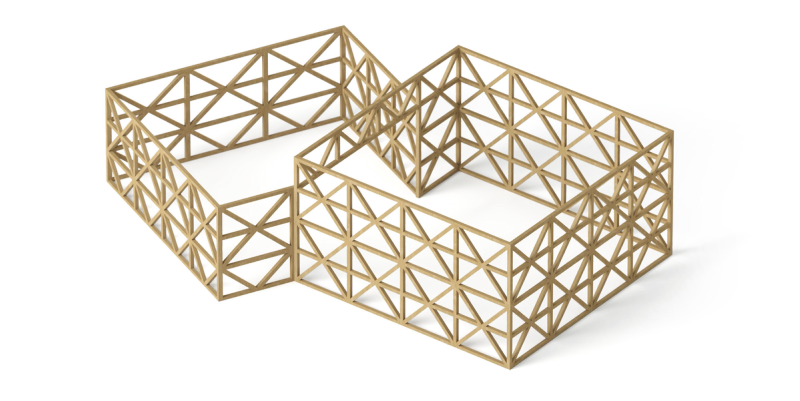
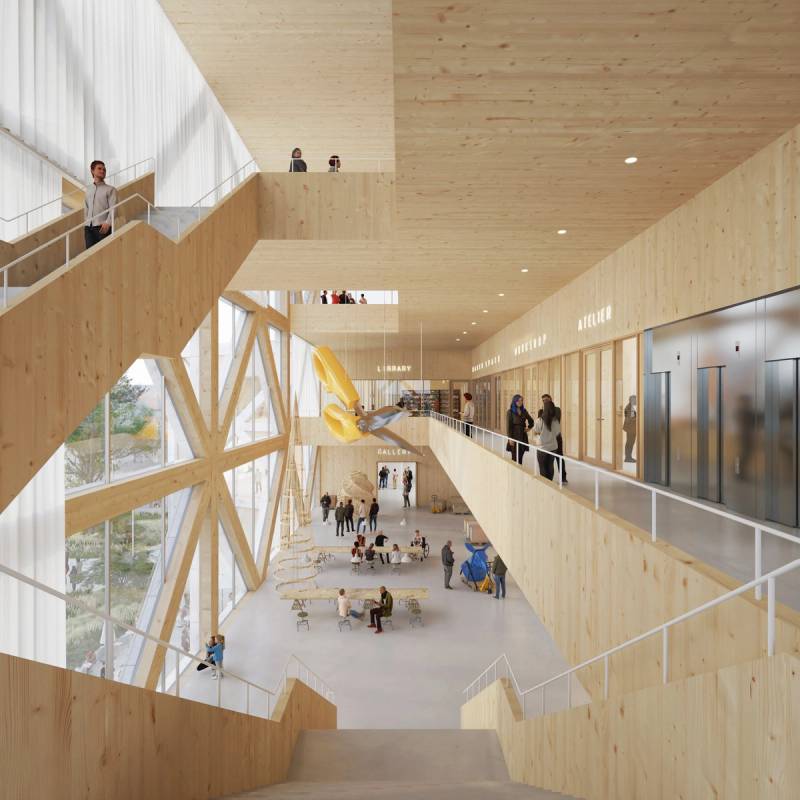

The building utilises a hybrid timber construction, with concrete used only where high load-bearing capacity is required for specific exhibitions. By using solid, recognisable materials like wood and stone rather than abstract systems, the design aims for long-term sustainability and a warm, "at-home" atmosphere for visitors.
The exoskeleton structure minimises the need for internal load-bearing columns, allowing for massive, flexible exhibition spaces. Additionally, the façade glazing can be adjusted to create controlled lighting environments for sensitive displays.