GU University LibraryGU University
LibraryGU University
Library
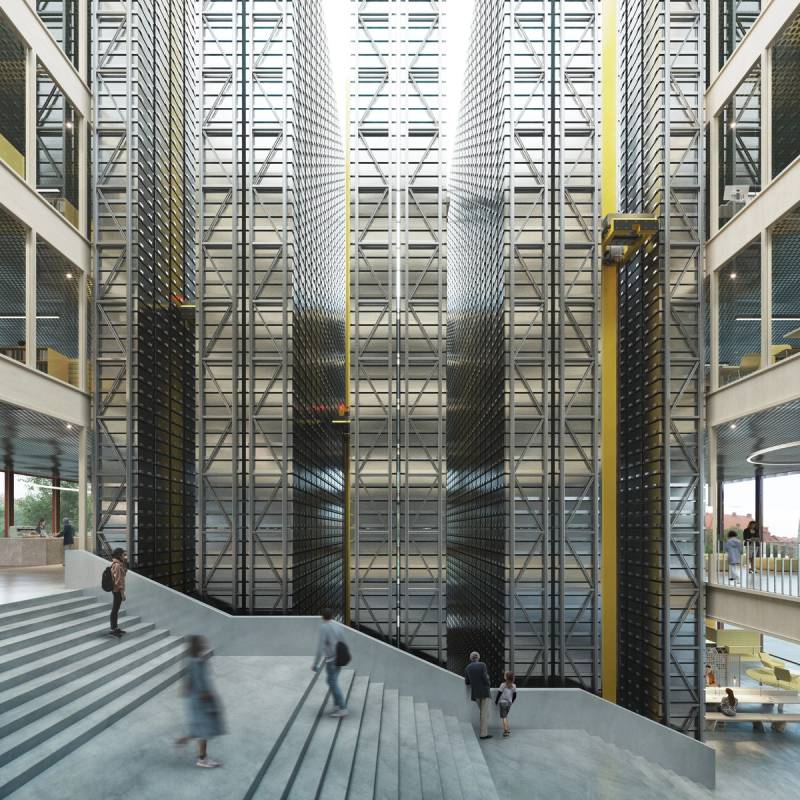
The proposal for a new university library for Humanities and Fine Arts at Näckrosen aims to strengthen and develop the site’s urban and cultural-historical values. The design builds upon the existing qualities of the surrounding city and park spaces, as well as the carefully designed institutional buildings that together form the character of the university’s green campus environment. The new library is conceived as a contemporary addition with a clear identity and openness, complementing its core function by reinforcing the university’s presence in the city and creating new opportunities for interaction between academia and society.
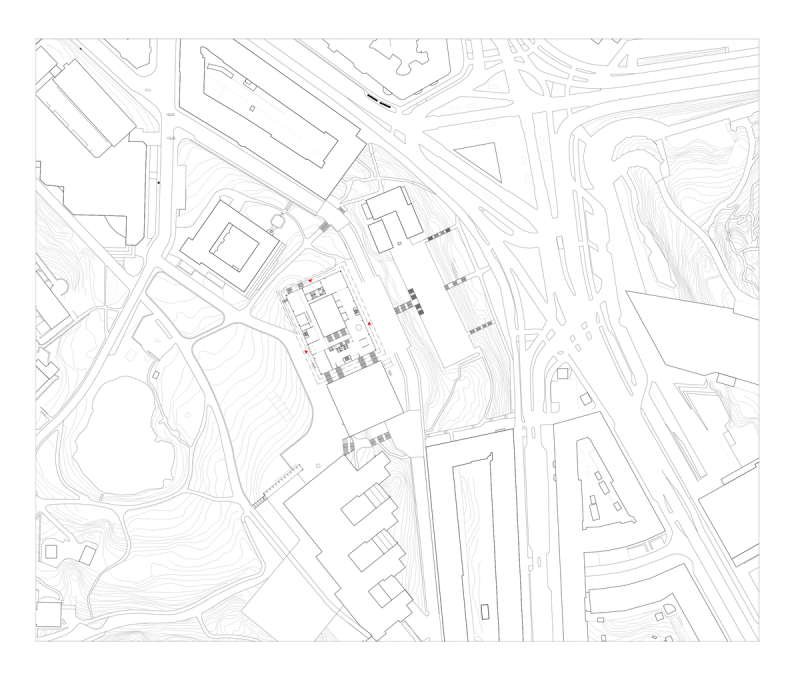
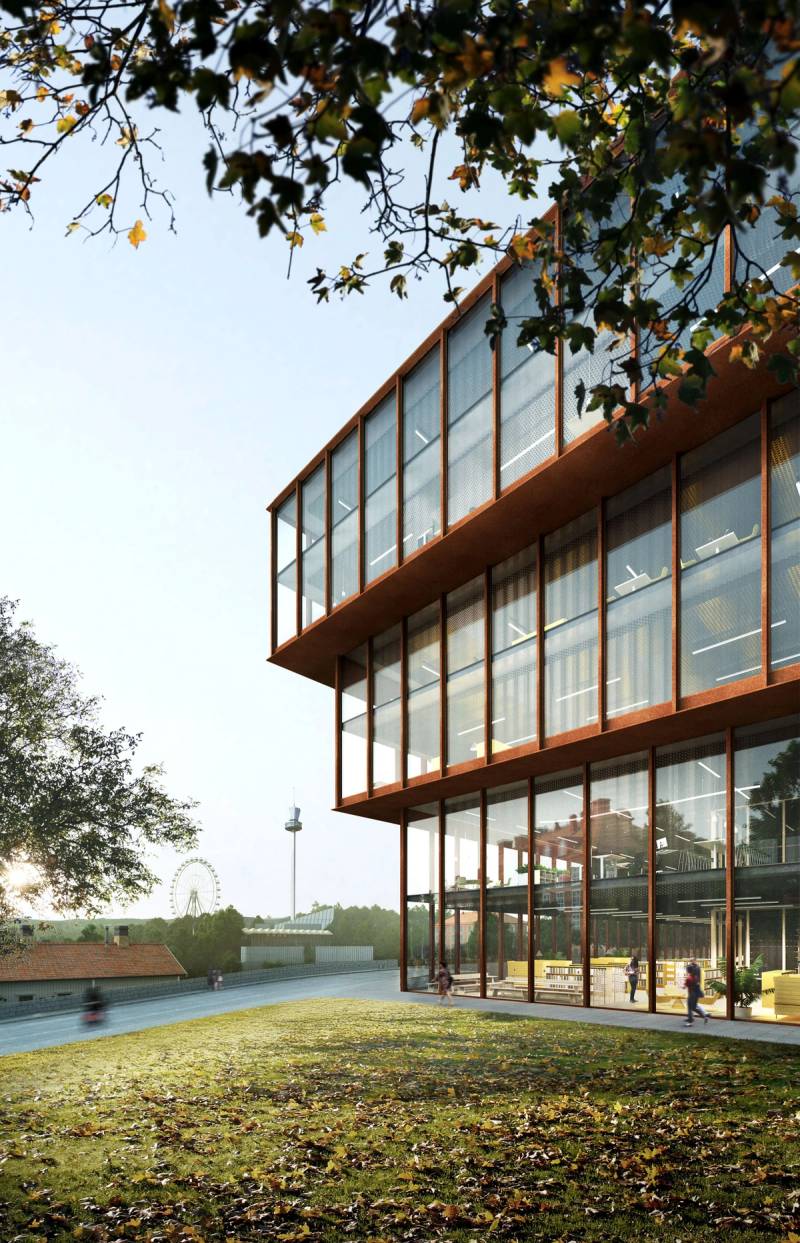
The Näckrosen area can be described as a hidden oasis in central Gothenburg, rich in natural and historical value yet partly concealed and difficult to access. While the area already contains well-functioning and beautiful urban and park spaces, the connections to surrounding parts of the city could be improved to make the campus more visible and accessible. The proposal therefore concentrates development in a single new building, allowing much of the existing architecture and cultural heritage to remain intact while introducing a new central library building. As campuses connect diverse institutions through proximity, the library is envisioned as an open platform for knowledge where students, researchers, and the public can meet, exchange ideas, and foster collaboration.
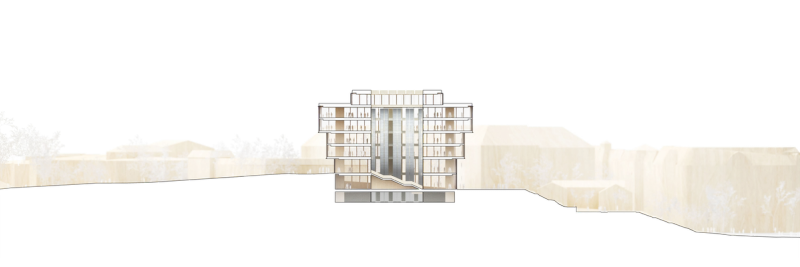
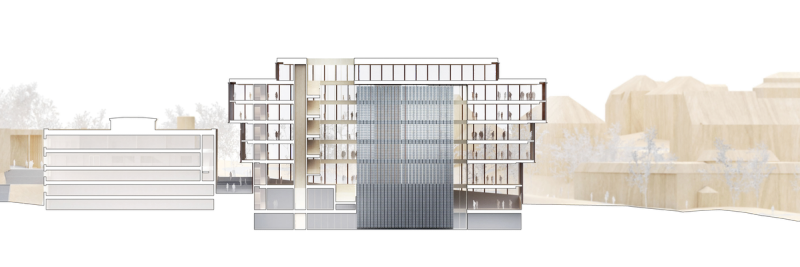
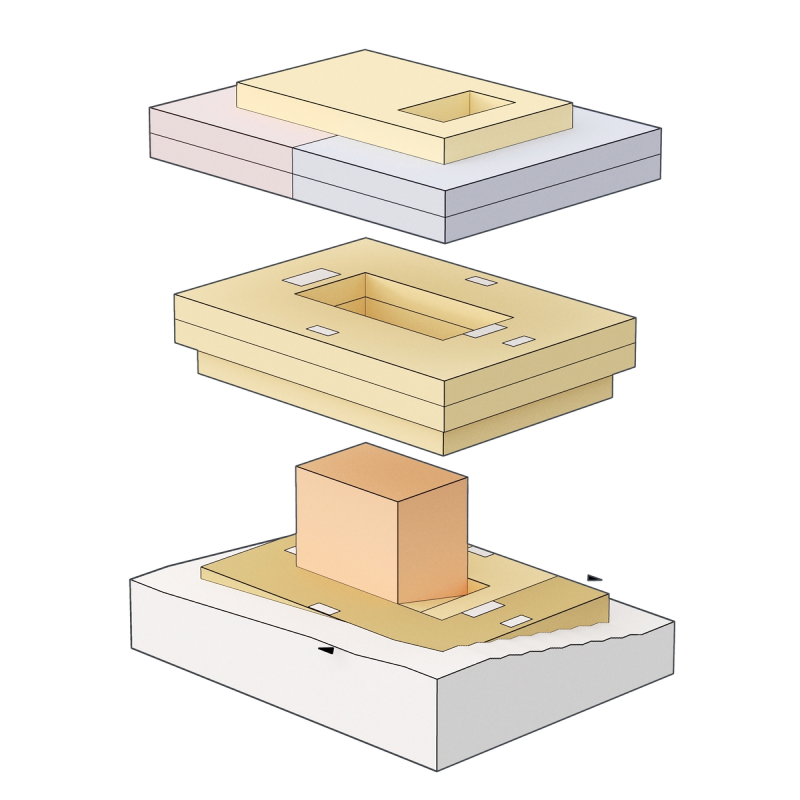
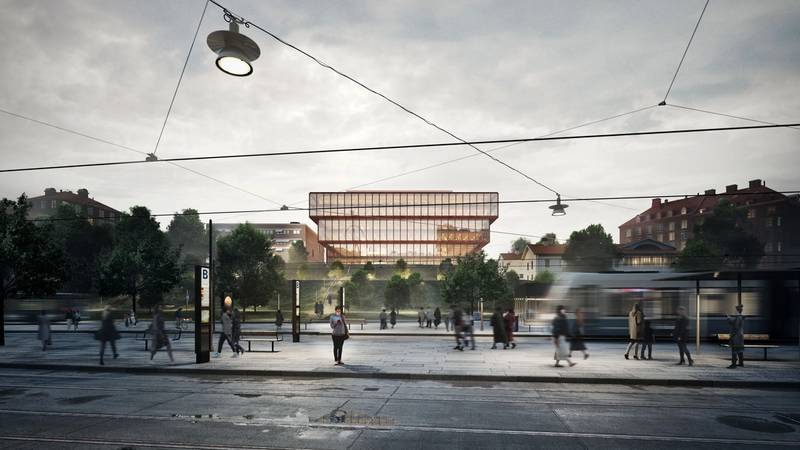
The library itself is designed as a prominent building on the hill, creating a landmark that addresses the larger urban scale toward Korsvägen while stepping down toward the smaller scale of Näckrosparken. Its strategic location and new entrance routes strengthen connections between the campus and the city, establishing the library as an important meeting place for students and visitors. Inside, entrances lead to a central, light-filled atrium around which the library’s functions are organized, providing clear orientation and a strong spatial identity. The building’s flexible layout and large continuous spaces also allow the library to adapt to changing needs over time and, if necessary, be transformed for other uses in the future.