Kalmar Museum of ArtKalmar
Museum of ArtKalmar
Museum of Art
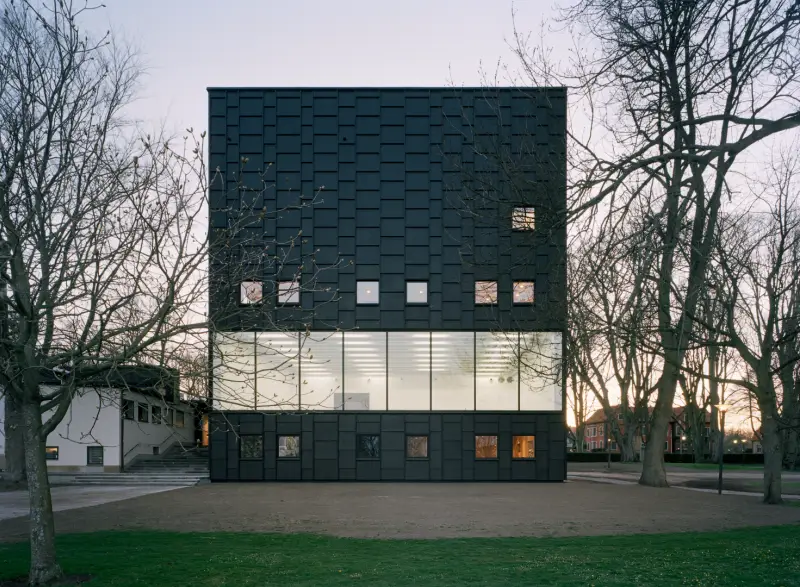
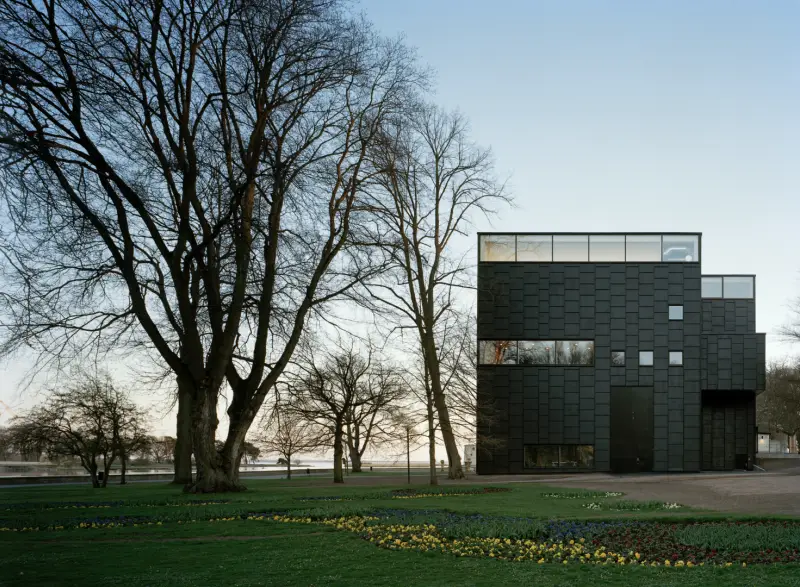
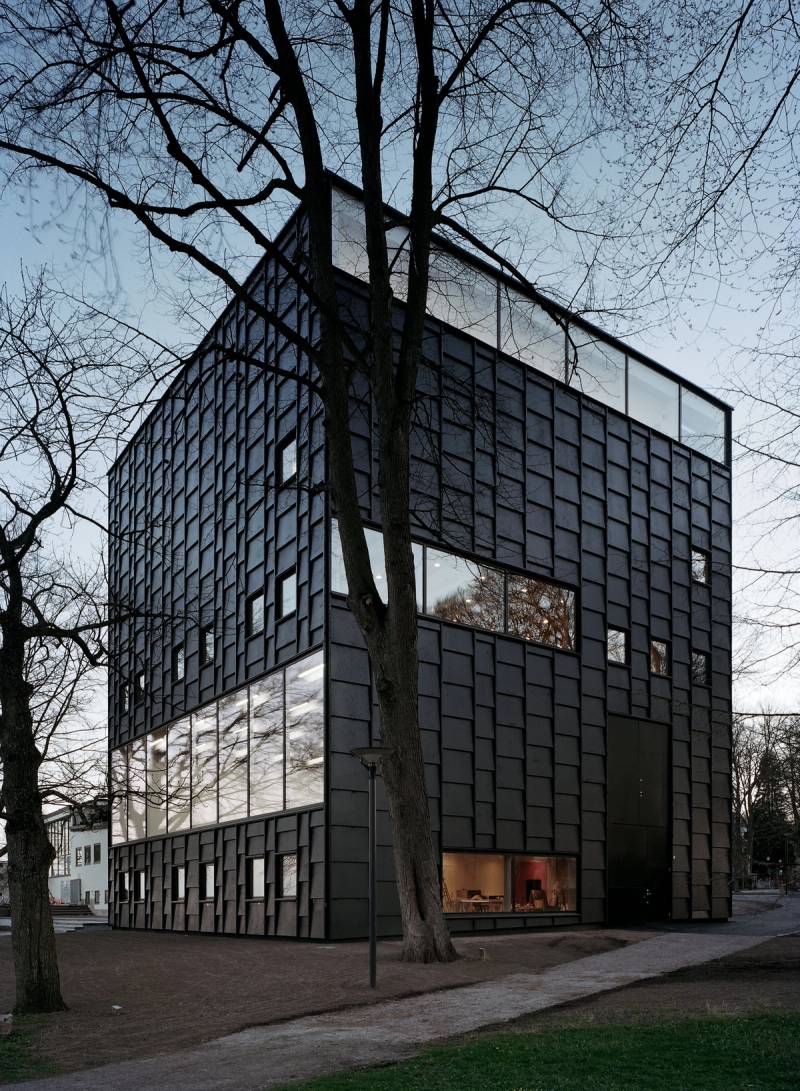
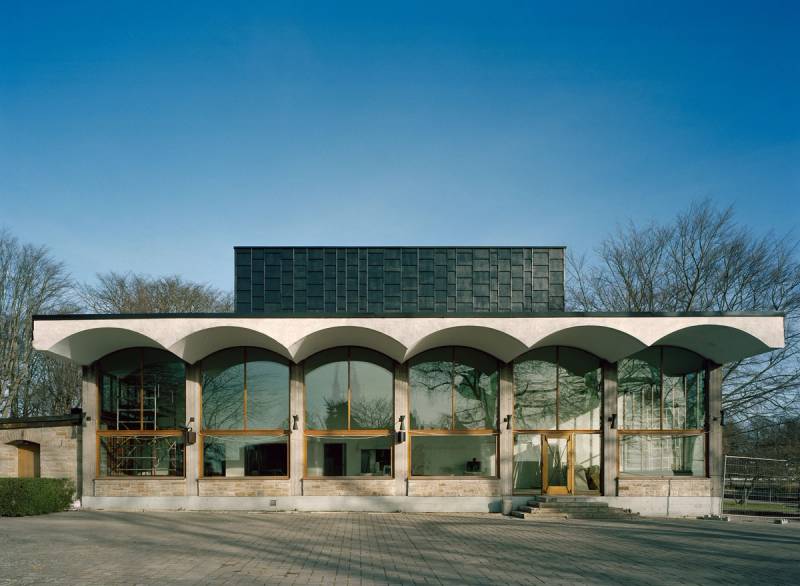
The Kalmar Museum of Art is the result of a winning proposal in an open international competition held in 2004 and was inaugurated on the 10th of May 2008. Situated amongst the tall trees in the main park of the Renaissance town of Kalmar, it is built on part of the remains of the medieval city wall, adjacent to a 1930s restaurant pavilion by the Swedish modernist Sven Ivar Lind.
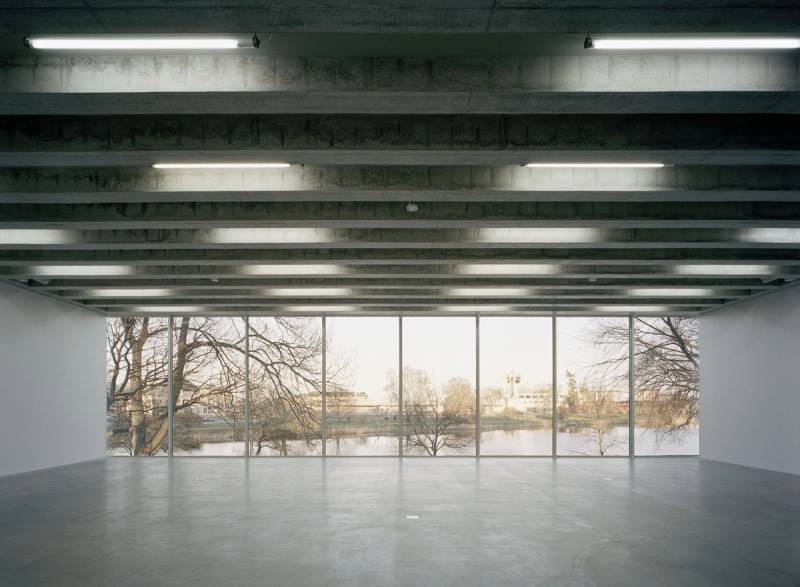
Kalmar is a flat town, and the museum adopts a new stance that complements the horizontal character of this urban landscape. It is a new place in the midst of a very present historical context, offering fresh perspectives on contemporary society in a broad sense.
The competition motto was ‘Platform’, which remains the conceptual idea of the museum: a series of open platforms for art-related activities. This is also reflected in the construction, featuring large spans for maximum flexibility on each level, ensuring that both light and space can be transformed and adjusted to meet the specific requirements of each exhibition.
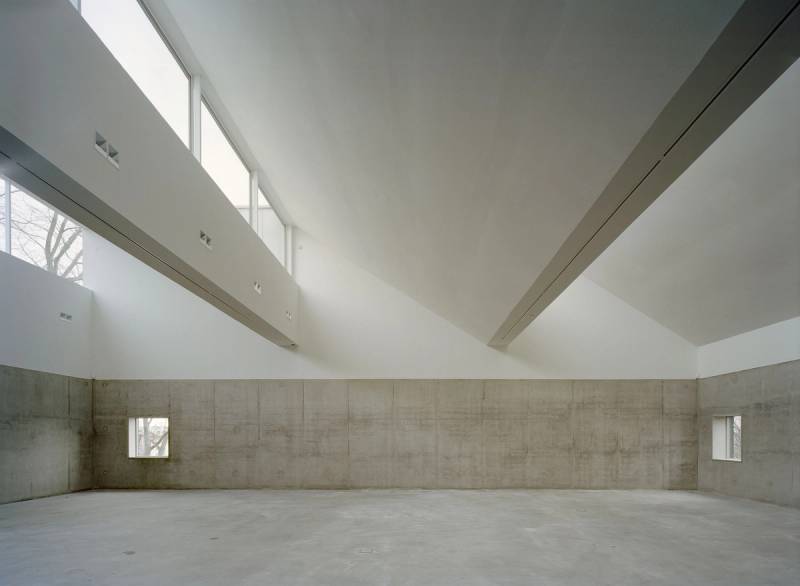
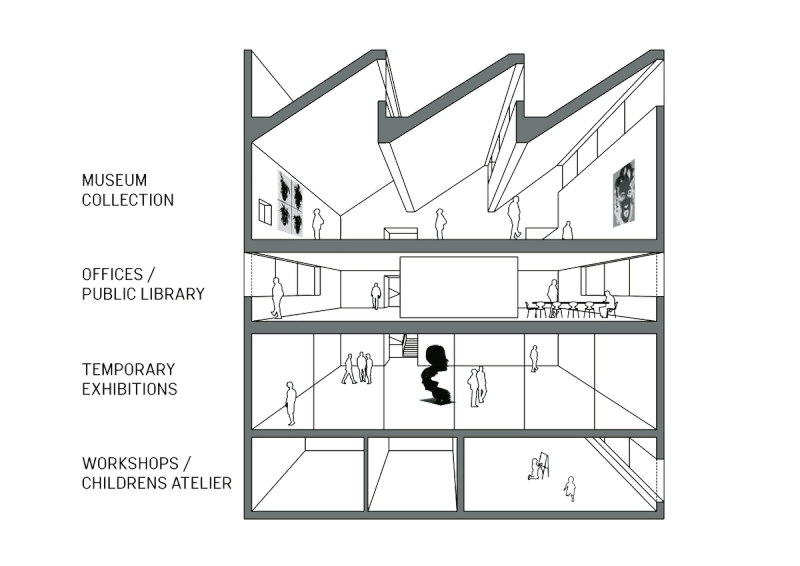
The museum is a four-storey black cube, clad in large-scale wooden panels and punctuated by expansive glazed openings. It houses the Kalmar collection of Modern Art and provides spaces for temporary exhibitions, video art, performances, and concerts. Although almost domestic in scale, the museum offers a variety of exhibition conditions. The two main spaces are the ‘white box’, where one side can open up completely to integrate the exterior of the park, and the top-floor gallery, which is lit by saw-tooth skylights that double its ceiling height. In addition, the building houses a public art library and open workshops.
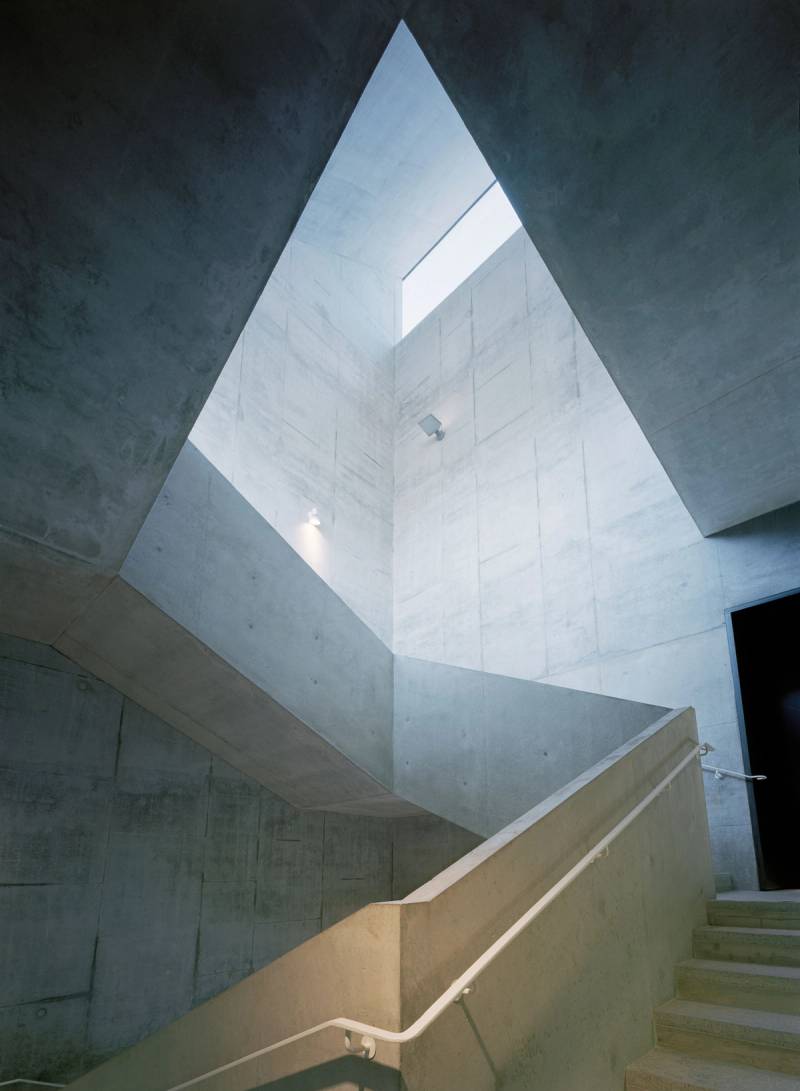
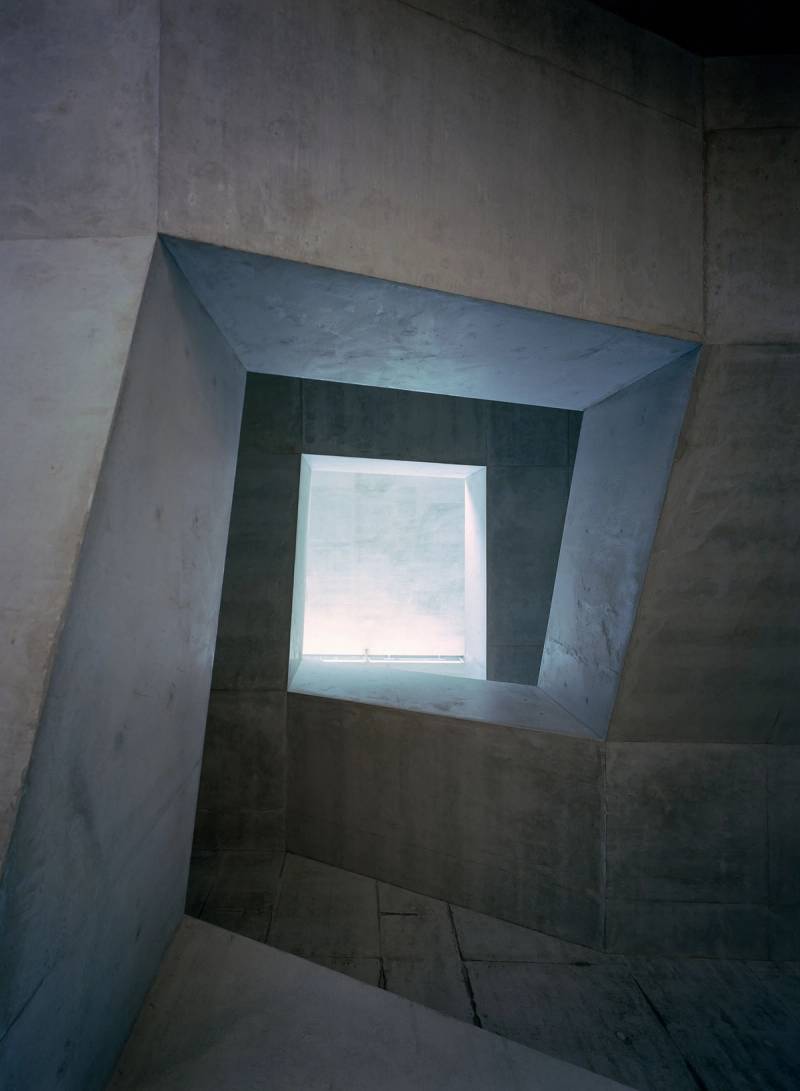
One of the main architectural features is the open staircase, which spirals the full height of the building, starting from the new entrance lobby that interconnects the lakeside and the park. It is a top-lit space with all surfaces finished in exposed in situ cast concrete. The four floors, each distinct from the others, are stacked vertically, creating a path into the greenery of the trees with a series of varied spatial experiences, while offering views of the environs: Kalmar Castle, the lake, and the city centre.
The building is designed to comply with high Swedish standards regarding the use of sustainable, sound, and renewable materials, as well as energy-efficient climate control solutions.
The basic construction is in situ cast concrete—a heavy core with external insulation—which contributes to a stable interior climate: 21°C (±2°C) and a constant 50% relative air humidity. The large spans are achieved using post-tensioned concrete slabs. The façades are made of stained black plywood (600/900/1200 x 900 mm), mounted in layers on a framework of saw-finished, slow-grown pine. Interior finishes include exposed concrete, local limestone, black-stained plywood doors and panels, and white-painted walls and ceilings.
ThamVidegård has also designed various furniture pieces for the museum, including the museum bench, the green ‘bock’ tables, the hexagonal tables in white ash and steel/Carrara marble, and the library interior.